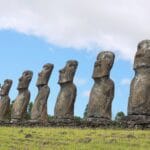
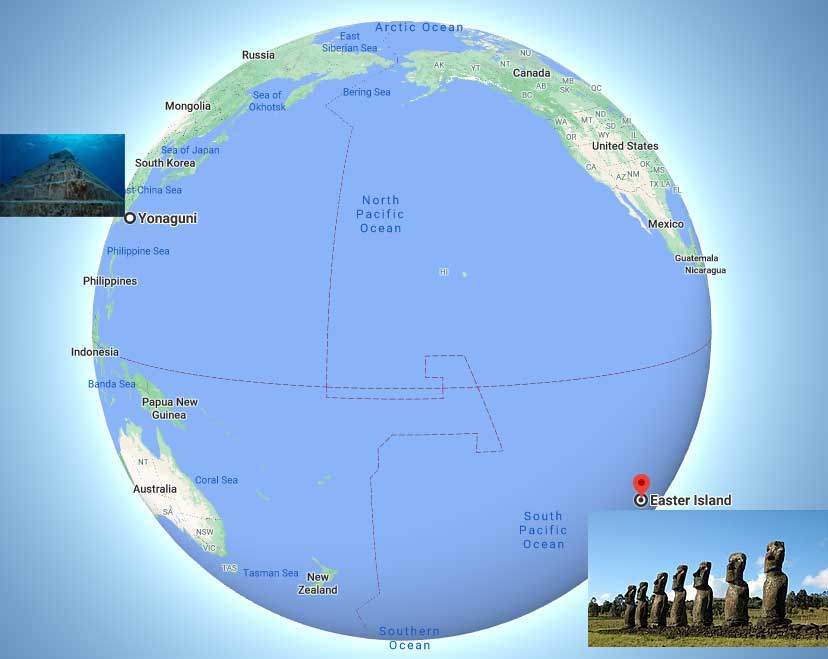
Easter Island (Rapa Nui) is a remote island and special territory of Chile, at the southeastern point of the Polynesian Triangle in the Pacific Ocean. The island is a remnant of continent Mu (Lemuria) that sank into the Pacific Ocean about 14,500 years ago after being peacefully inhabited for 250,000 years. Rapa Nui is renowned for its ~1,000 monumental stone statues, called Moai.
Stone statues of Moai are gigantic and even today in the 21st century it is difficult to lift them up and move them around. The largest unfinished statue on Easter Island is known as Te Tokanga. It would have been 21 meters tall (like an 8-storey building) and weighed around 270 tons (!!!) if completed, according to Carl P. Lipo/Binghamton University and Terry L. Hunt/University of Arizona.
Oral traditions reveal that Moai statues "walked" to their destinations, suggesting that gravity neutralization technology, similar to the technology used to build pyramids in Egypt, was used to make Moai statues "levitate" on their way from the quarry to their final destinations.
Some archeologists suggest that "walking" of Moai was accomplished by wobbling the statues in vertical position along a "suitable road". There are 3 major problems with this hypothesis: 1. there are no roads on Easter Islands; 2. most statues are placed on elevated pedestal foundations - indicating that they were lifted up during installation; 3. How do you lift a ~270 tons 8-storey tall statue from horizontal to vertical position? You are welcome to check lifting capacity of today's cranes...
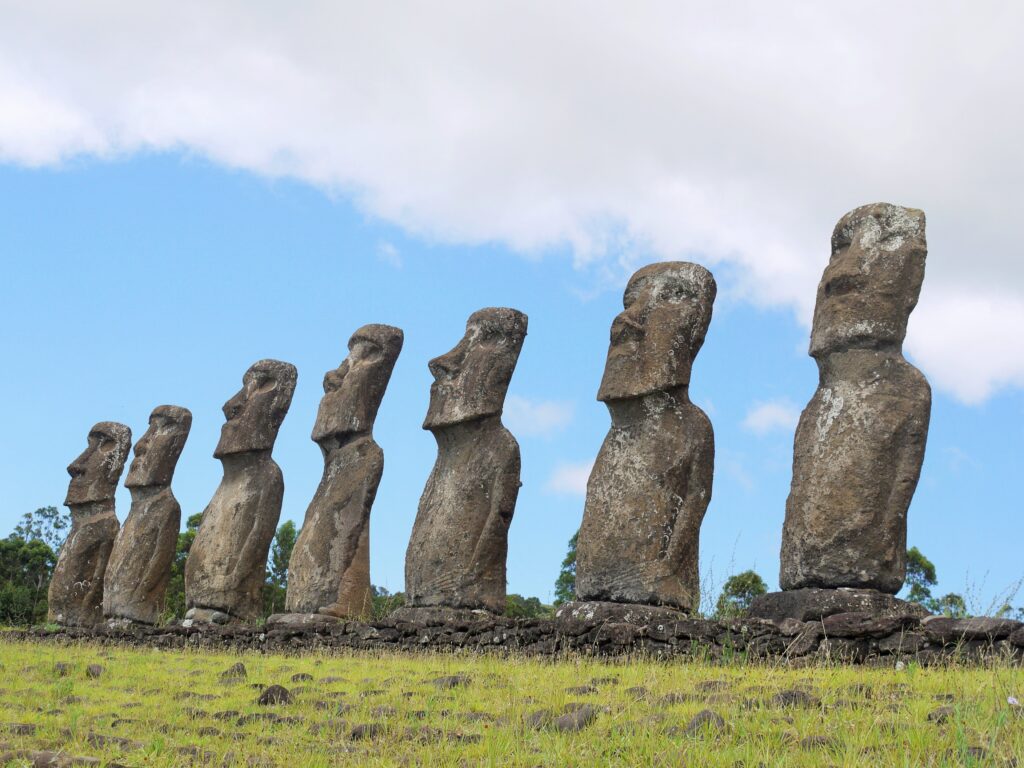
Stylized statues of Seven Thaori look west. The Hyades star cluster sets there daily, not only during night. Coincidence?
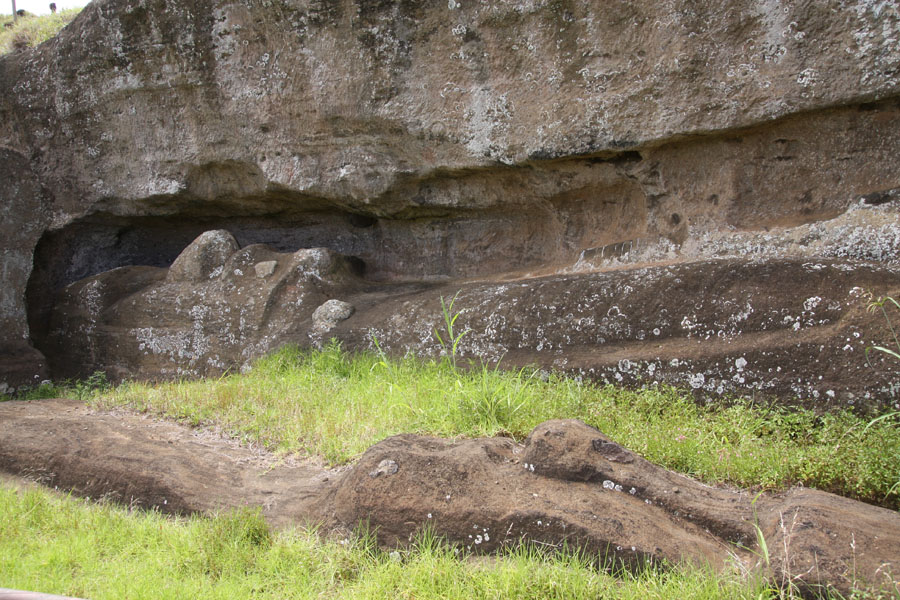
Gigantic Moai stone statues during construction. Lifting statues from their locations under rocks would not be a simple task even for the best modern equipment. Neutralizing gravity force and making statues levitate was much more convenient. Note absence of any roads - there was no need for roads...
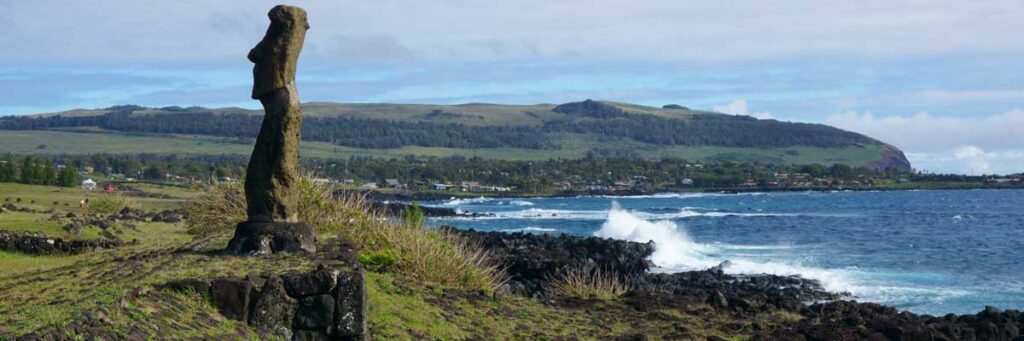
Multi-storey tall stone statue requires a foundation.
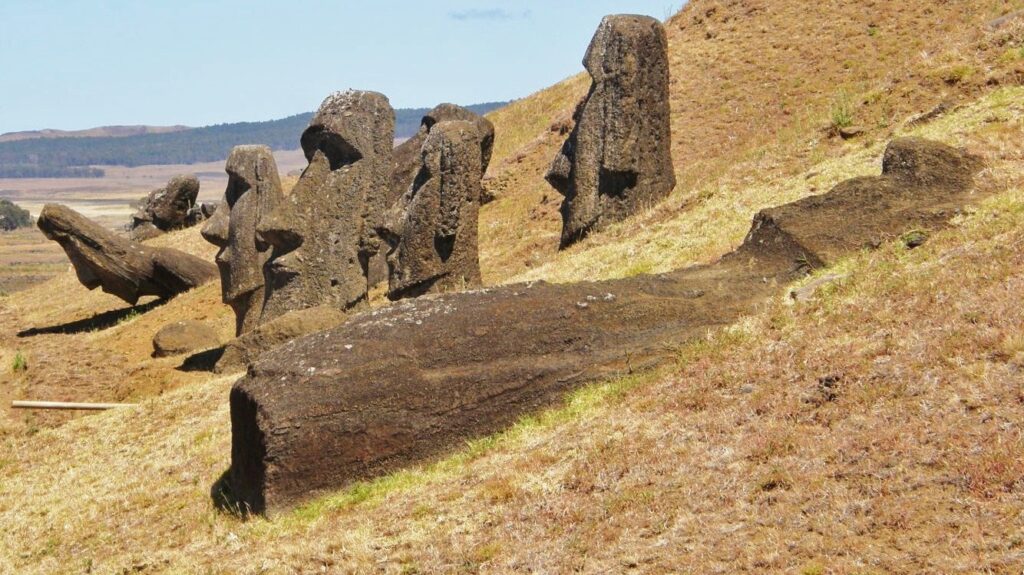
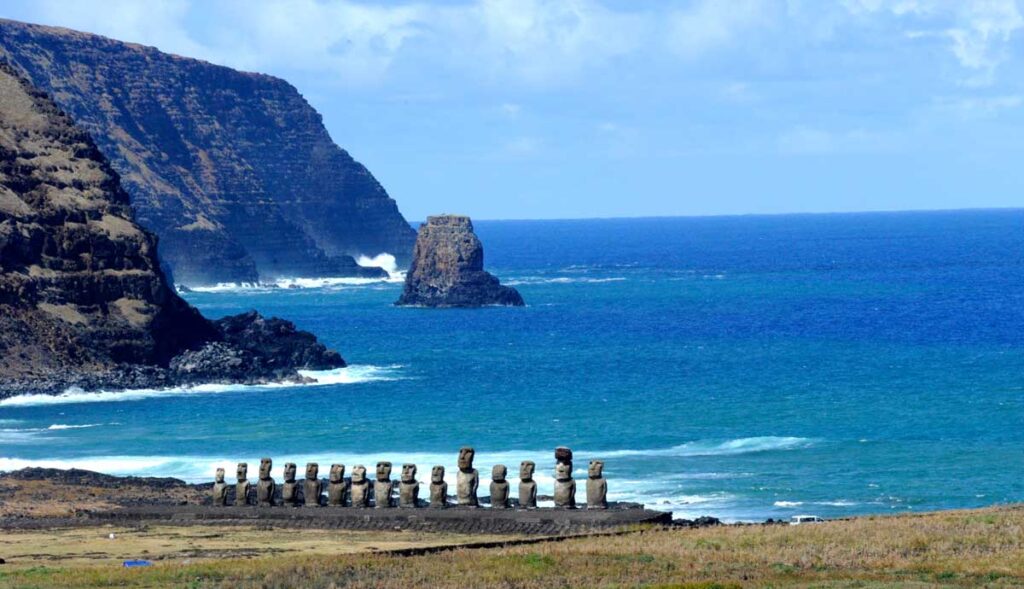
Since Rapa Nui was a quarry, most of the statues were destined to be transported to various locations around the continent of Mu. Catastrophic sinking of the Mu continent ~14,500 years ago disrupted these plans and now we have about 1000 Moai statues "stuck" in the quarry.
3D model of a fragment of the quarry constructed using a process known as photogrammetry. Carl P. Lipo/Binghamton University; Terry L. Hunt/University of Arizona